SSOGEN / Oracle EBS Ping SSO with PingFederate and PingOne
Integration
Oracle EBS Ping SSO with PingFederate and PingOne
EBS does not support SAML directly, so SSOGEN bridges the two as a service provider in your Ping SAML identity provider.
How a sign-in goes
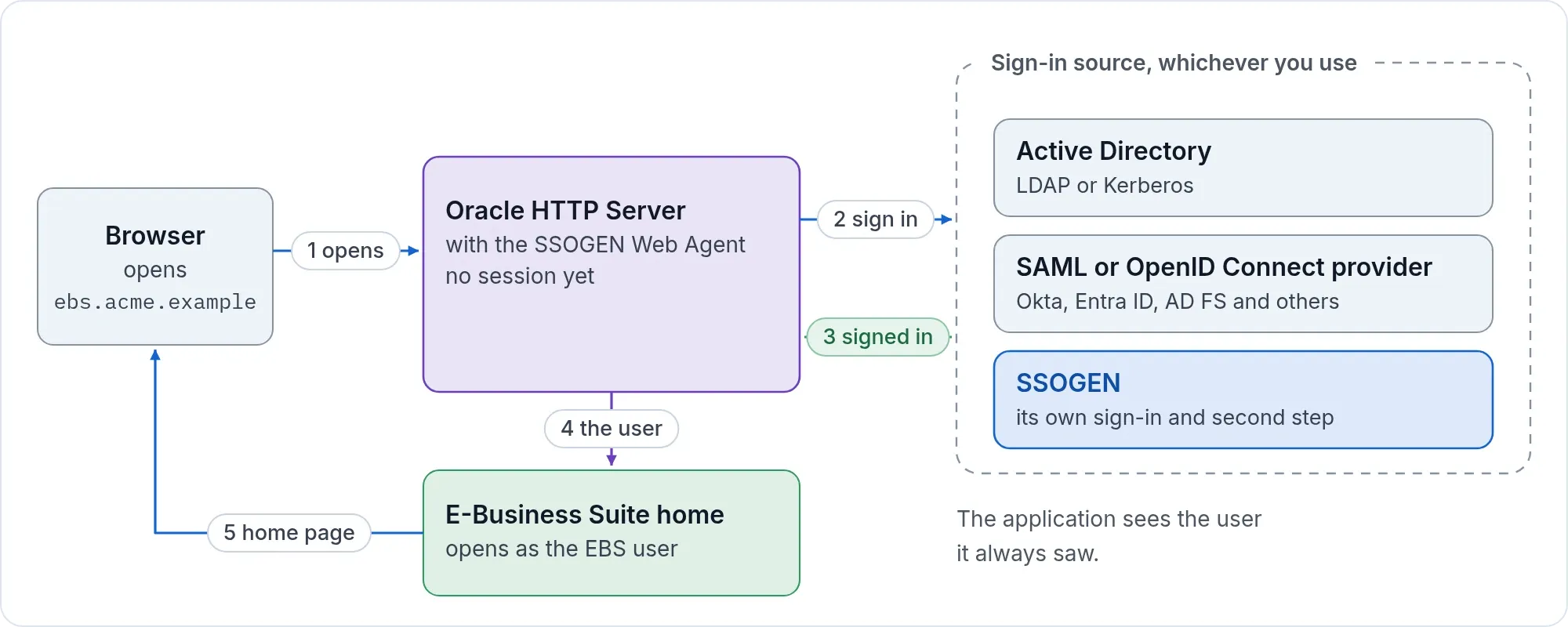
- A person opens
https://ebs.acme.example/OA_HTML/AppsLogin. - The SSOGEN Web Agent on the EBS web tier sends the browser to SSOGEN, which sends it to Ping.
- Ping signs the person in. After a successful sign-in the browser returns to the EBS home page through SSOGEN.
The experience is the same as for any other application behind Ping. SSOGEN does not show a page in between. No Oracle Access Manager, Oracle Internet Directory or Oracle Unified Directory is needed, and PeopleSoft and JD Edwards use the same Ping setup.
What you need
- A Ping administrator: PingFederate, or PingOne with your Environment ID.
- Oracle E-Business Suite 12.2 or 12.1, and the SSOGEN integration tool for it.
- An SSOGEN tenant,
https://acme.ssogen.ai, or a license key for the direct path below.
Path A: through SSOGEN
In Ping
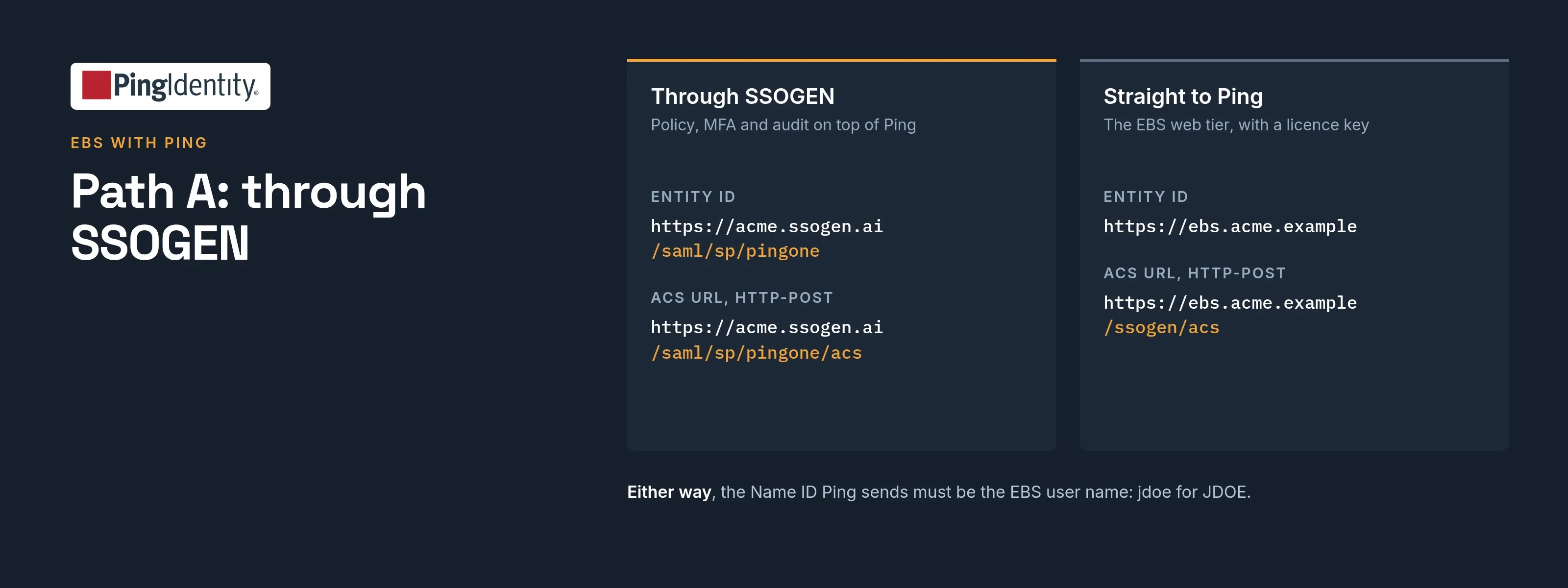
Add SSOGEN as a SAML service provider (a SAML application in PingOne):
| Ping asks for | Value |
|---|---|
| Entity ID | https://acme.ssogen.ai/saml/sp/pingone |
| ACS URL, binding HTTP-POST | https://acme.ssogen.ai/saml/sp/pingone/acs |
| Signing | Sign the assertion; Name ID format unspecified or emailAddress |
| Attribute | email mapped to the email address; saml_subject mapped to a stable sign-in name |
| Access | The group that may use EBS |
In PingFederate the same values go into an SP connection with the browser SSO profile. The PingOne screens, the OpenID Connect option (issuer https://auth.pingone.com/<Environment ID>/as) and the errors are on PingOne as the sign-in source. For PingFederate, any SAML identity provider lists what the provider must send.
In SSOGEN
Import the Ping metadata and map email. Then create, validate, test, try and activate the provider. Allow it in the policy that covers EBS (Add a SAML identity provider in SSOGEN).
On the EBS side
- Register EBS in SSOGEN as a Web Agent application with the Client URL
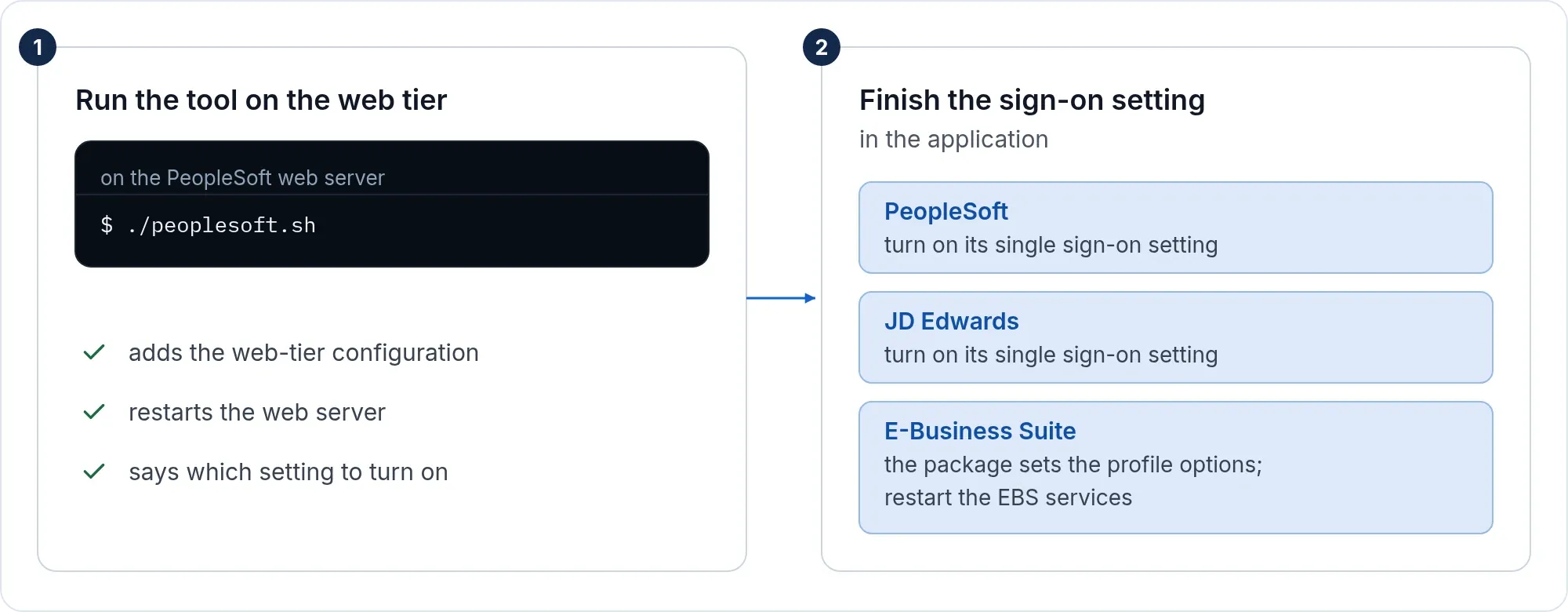
https://ebs.acme.example. Set Identify the person by to the value that equals the EBS user name:jdoeorJDOEfor the EBS userJDOE. The agent sends it in capitals and never cuts off a domain part. - Run the tool and finish the setting in EBS as on the Oracle EBS single sign-on page.
- Create the EBS users; EBS links the account at the first sign-in. Keep
https://ebs.acme.example/OA_HTML/AppsLocalLogin.jspforSYSADMIN.
Path B: straight to Ping, no SSOGEN in between
With a license key from SSOGEN, the tool connects the EBS web tier to Ping directly (-mode=saml).
| Ping asks for | Value |
|---|---|
| Entity ID | https://ebs.acme.example |
| ACS URL | https://ebs.acme.example/ssogen/acs |
| Signing | Sign the assertion |
Name ID or saml_subject |
The EBS user name |
Save the Ping metadata as ebs-internal-idp.xml in the ssogen folder, or set SSOGENSamlIdpMetadataURL, and run the tool as on the EBS page. For OpenID Connect use -mode=oidc with the redirect URI https://ebs.acme.example/ssogen/oidc/callback.
If it does not work
| Symptom | What to do |
|---|---|
| Try connection says the assertion carried no subject | Ping sends no Name ID. Map saml_subject or configure a Name ID. |
| One person gets a new account at each sign-in | Ping sends a transient Name ID. Send a stable one. |
| Sign-in works, EBS does not know the user | The name sent is not an EBS user name. Change Identify the person by, or what Ping sends. |
| Sign-ins stop after Ping changes its signing certificate | Fetch the metadata again and activate it. |